
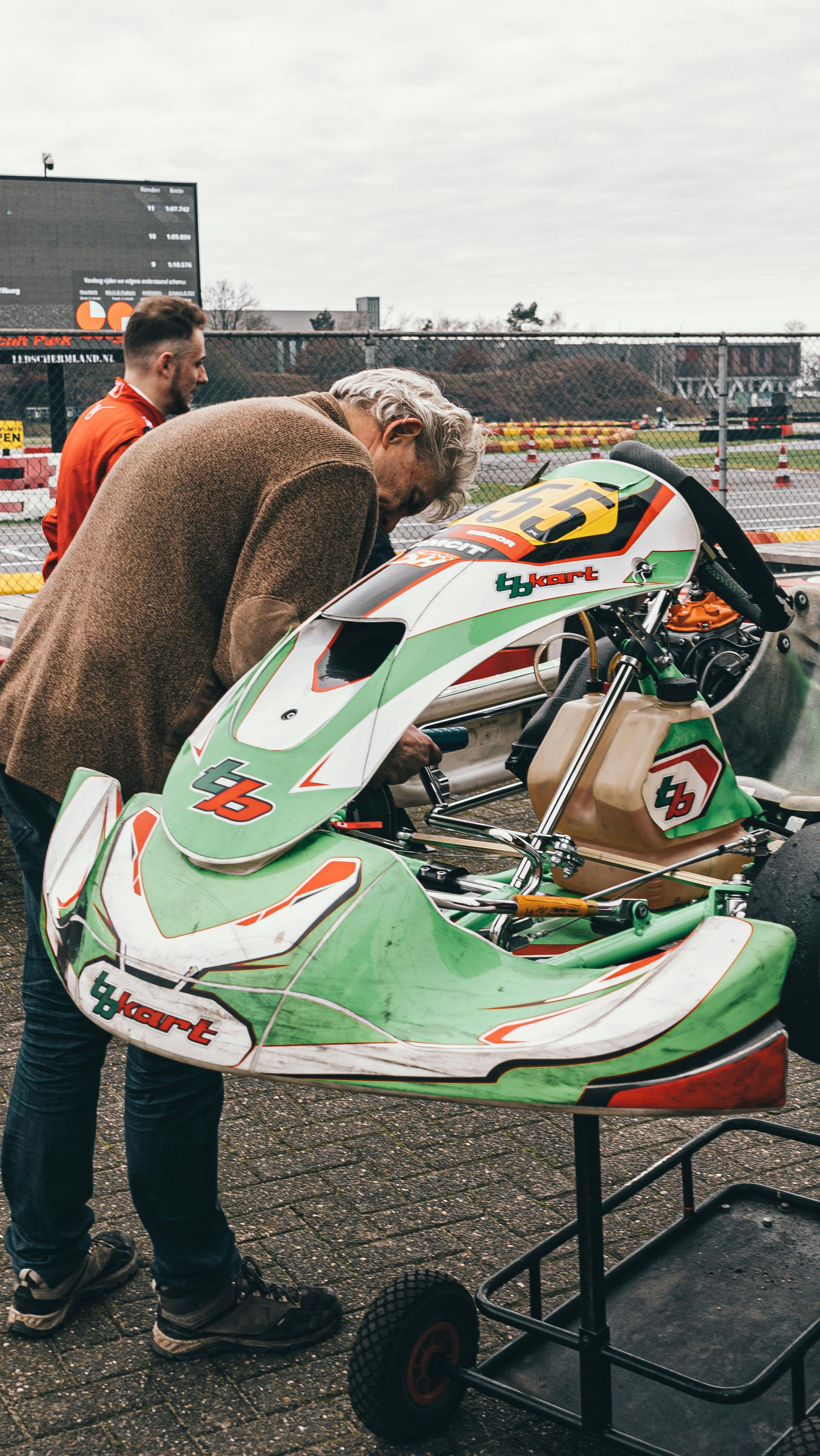
Every kart racer wants to go faster. But "try harder" isn't a strategy. It's a recipe for over-driving and inconsistency. The fastest racers in any paddock share a common trait: they're methodical. They use data to identify where time is being lost, make targeted changes, and measure the results. Here's how you can adopt the same approach, even without a professional data acquisition system.
Start With What You Can Measure
You don't need an expensive data logger to start racing with data. Even basic information, recorded consistently, becomes incredibly powerful over time:
- Lap Times: The most fundamental data point. Record your best lap, average lap, and the spread between them. A small spread means you're consistent. A large spread means there's easy time to find just by eliminating your bad laps.
- Session Notes: How did the kart feel? Was it understeering in the slow corners? Oversteering on exit? These qualitative notes become quantitative data when correlated with setup changes.
- Setup Details: Every setting on the kart: tire pressures, front/rear width, gear ratio, carburetor settings, etc. should be recorded for every session. Without this, you can't correlate changes to results.
- Conditions: Temperature, humidity, track condition (green, rubbered-in, dusty), wind direction. The same setup can produce very different results in different conditions.
The Scientific Method for Karting
The most effective approach to improving is surprisingly simple. It's the scientific method applied to karting:
- 1. Observe: Run a session and carefully note how the kart behaves. Where are you losing time? Is it corner entry, mid-corner, or exit?
- 2. Hypothesize: Based on your observations, form a theory. "I think I'm losing time in the slow hairpin because the kart understeers on entry."
- 3. Change One Variable: Make a single adjustment that addresses your hypothesis. Wider front track width to increase front-end grip, for example.
- 4. Test: Run another session under the same conditions and compare lap times and kart feel.
- 5. Record Everything: Document the change, the result, and your observations. Did it help? Make it worse? Was the effect what you expected?
Patterns Hide in the Data
The real power of data collection shows up over weeks and months, not in a single session. When you have 20+ sessions logged at the same track, patterns emerge that you'd never notice otherwise:
- Temperature Correlations: You might discover that your best laps always happen when track temps are between 100-115°F, and you consistently struggle above 130°F. That tells you your tire pressure strategy needs to change in the heat.
- Setup Trends: Over time, you'll see that widening the rear track 5mm always improves your times at Track A but hurts at Track B. That's because Track A is high-grip with fast sweepers, while Track B is low-grip with tight corners.
- Consistency Indicators: Tracking your lap time spread session over session shows whether you're actually becoming a more consistent driver, independent of raw speed.
Beyond Lap Times: What the Fast Guys Track
As you advance, consider tracking additional data points that separate good racers from great ones:
- Tire Condition: Document tire wear and surface condition after every session. Learn to correlate tire health with performance degradation.
- Fuel Strategy: For two-stroke engines, track your fuel mixture ratio and how much fuel you use per session. Running lean costs power; running rich fouls plugs.
- Driver Fitness: Note how you felt physically and mentally. You'd be surprised how much lap times suffer when you're dehydrated, tired, or mentally unfocused.
- Competitor Comparison: If you can get lap times from competitors running similar equipment, comparing your times to theirs helps you set realistic improvement targets.
Making Data Actionable
Data is only useful if you actually review it and act on it. The best routine is to spend 15 minutes after each race day reviewing your sessions: what went well, what didn't, and what you'll try differently next time. Write down your plan for the next session while the day is still fresh.
The hardest part of all this isn't the analysis, it's the discipline to actually record everything consistently. Scribbling notes on scraps of paper works for a while, but those notes get lost, and comparing across sessions becomes impossible. That's why purpose-built tools make such a difference. The Kart Track app was designed specifically for this workflow: structured session logging, setup tracking, condition recording, and AI-powered analysis that can spot trends across your entire history. It turns your race data into a competitive advantage instead of a pile of forgotten notebooks.